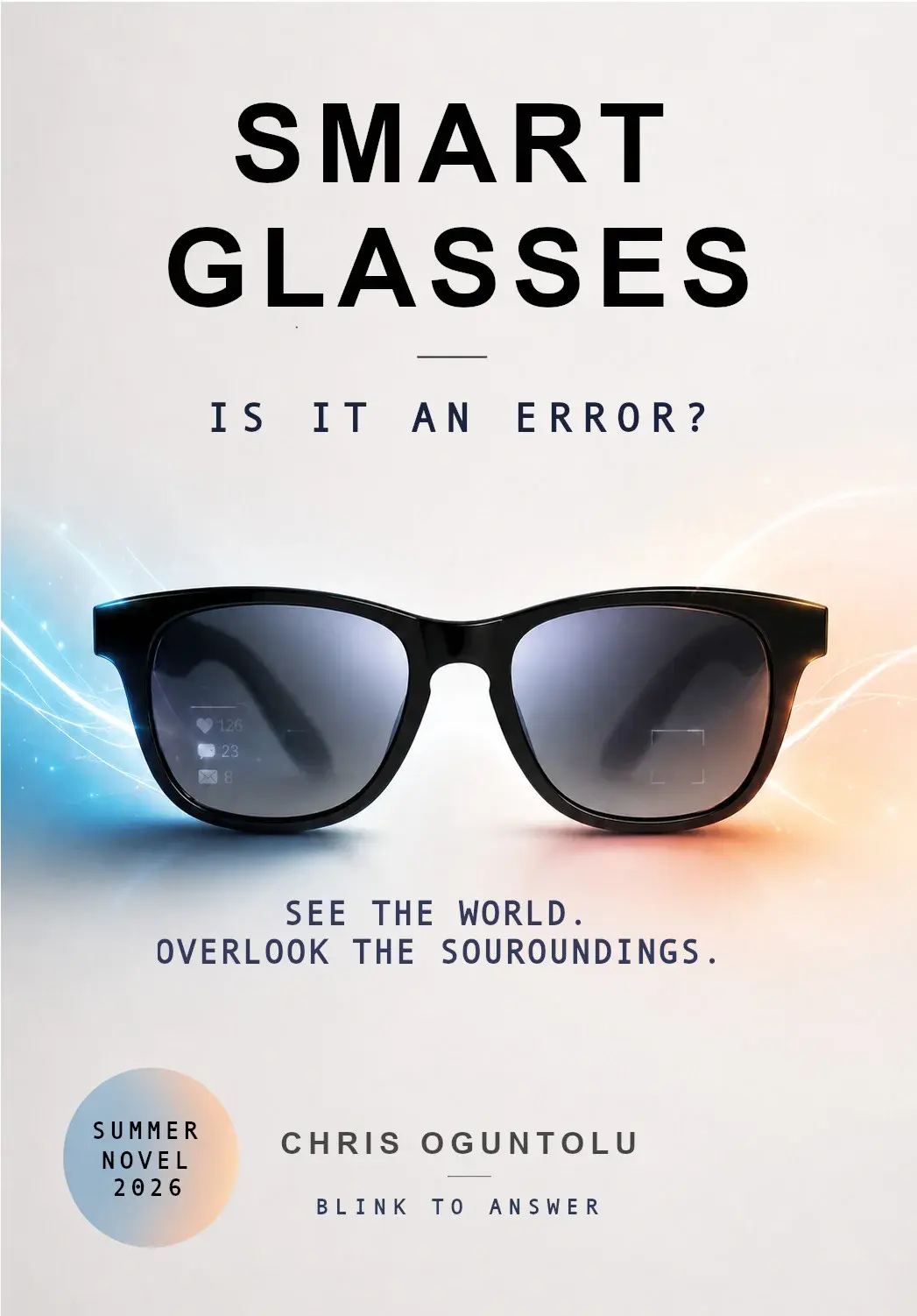
Timo Ahrens
31, IT consultant, Zurich.
Calls his life “full,” because full means: no gap for the real questions to fall into.
What's AI doing to us before we even notice?
Timo Ahrens, 31, an IT consultant in Zurich, buys himself a pair of AR glasses at a tech conference. They help him think.
They help him so well that he can no longer tell which of his sentences are still his.
In the background: three women, one summer, a thunderstorm, and in the end a suspicion too large to say out loud.
Artificial intelligence didn't conquer the world in 2026.
It just became the default setting.
If the AI knows what you'll say next —
which one of us is the human?
The future doesn't arrive as singularity.
It arrives as comfort.
Artificial intelligence isn't replacing our work.
It's replacing our honesty.
They call it Copilot.
But nobody asks who's at the wheel.
This isn't sci-fi.
This is the AI you've already written with this morning.
“Not for tourists.” — The first sentence that caught him.

She had sat too close all evening. He had taken the glasses off too soon.

plausibility
trade-off
scope creep
The words sounded like him. No one was asking whose they were any more.

He ran to think about nothing. It worked for sixteen minutes.

Movement was the only thing that wanted nothing from him.

She never says when it's too much. That was the problem.
Hey Timo,
I need to tell you something.
Sometimes he sees words no one has written yet.
He calls it tiredness.
He keeps calling it that, until he can't any more.
What if you can no longer tell whether you're seeing it — or it's seeing you?
CHARACTERS
31, IT consultant, Zurich.
Calls his life “full,” because full means: no gap for the real questions to fall into.
Cultural manager, Zurich.
Listens before she answers. Says things without hedging them.
Heiress, London/Frankfurt.
Hikes the Taunus with a Facebook group while a board meeting waits at home.
Physiotherapist, Zurich.
Moves without thinking about it. No performance, no hesitation.
Environmental engineer, Rapperswil.
Runs because it suits her. Says little, sees a lot — and shows none of it.
Sales, Zurich/everywhere.
Turns doubt into jokes, fear into motion. Loves Timo honestly, not gently.
Product manager, Zurich.
Says what everyone's thinking but no one will say. Takes Timo's excuses for what they are.
Couple, Zurich.
She asks: “If the glasses suggest your words — who's speaking?” He says: “Don't need them. Never have.” Both are right.
Creative, Zurich.
Speaks rarely, hits precisely. “What you see through glasses is an interpretation.”
They aren't for sale.
They are the study of a device that sits in no shop in 2026 — and yet, one day, will appear.
A website exists nonetheless. Who's behind it can't be said. Nothing is endorsed. Just linked.
EXCERPT
If you had seen Timo Ahrens on this Tuesday morning, the 30th of June 2026, in Berlin at GITEX AI Europe, you wouldn't have noticed anything dramatic. A man in his early thirties, neatly dressed, not polished—more as if he had spent five minutes too long thinking about it that morning and then decided to sell those five minutes as style.
Timo was 31 and claimed that his life was “full”. That was his favourite word, because it felt like a shield. Full meant: calendar full, head full, inbox full, weekends full. Full did not mean: heart full. Full meant, more or less: there is no gap into which real questions could fall.
Inside it smelled of coffee, recycled air-conditioning, and warmed-up batteries. The conference in Berlin was big enough to get lost in, and tightly enough lit to sell that as a feature. Everywhere LED walls flickered with key visuals that promised “impact” without ever specifying of what.
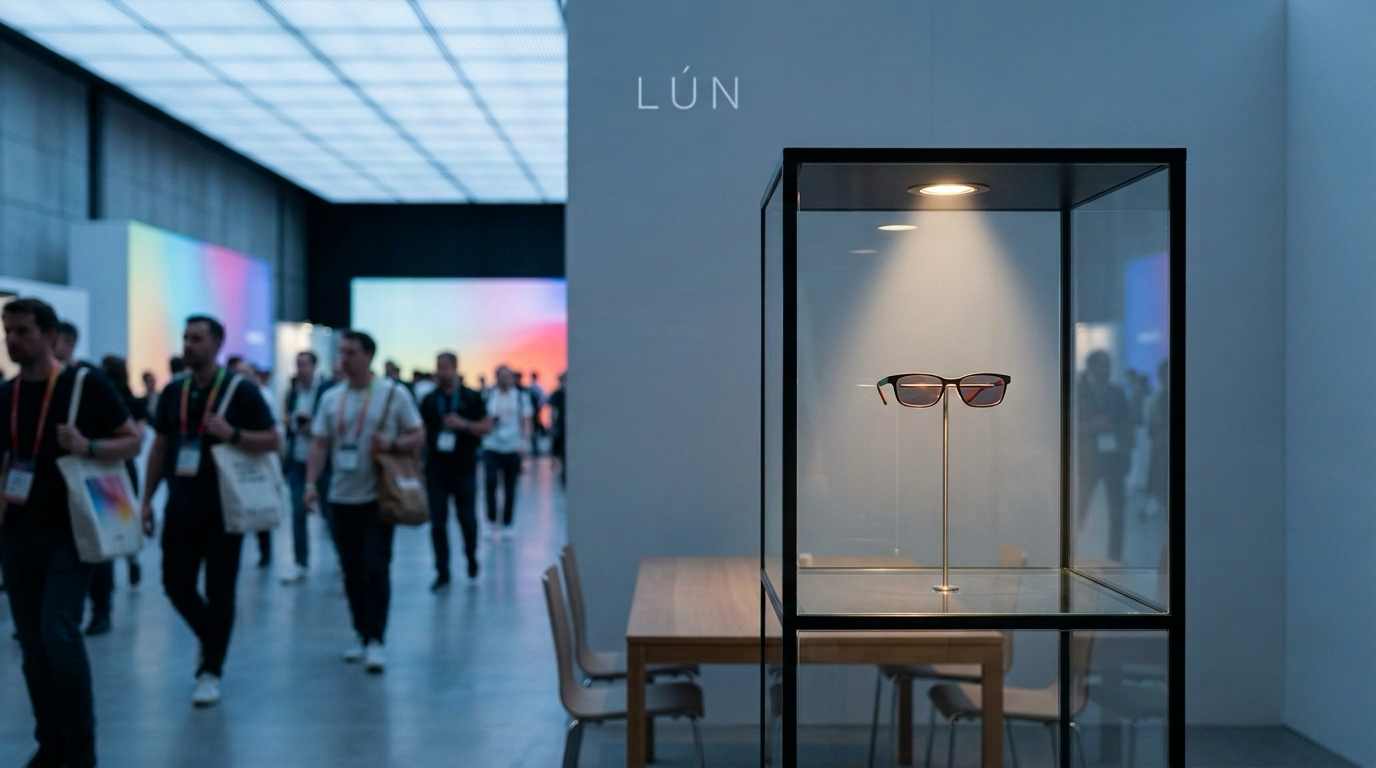
Then he saw the booth. It was smaller than the others, almost inconspicuous. No LED wall. No inflatable mascots. No “We Are the Future” in three-metre-high letters. Just a plain table, two chairs, a glass display case—as if someone had understood that the best way to sell the future is to act as if it has long been the present.
And inside it: a pair of glasses. Not chunky. Not like a science-fiction helmet. More like a very expensive, very self-confident pair of sunglasses. Slender, dark, minimalist—as if someone had decided that the future doesn't need to shout, it just needs to fit well.
That's the opening.
If you want more, the book takes it from here.
€1.72 Kindle (launch, was €4.99) · Paperback €13.79 · Audiobook €7.95 (Audible)
BUY + PASS IT ON
01
02
Books don't find their readers through algorithms — they find them through people.
Know someone who writes too much with AI and thinks too little about it? That's the person. One link does it.
→ A link to pass on03
Rather listen than read? The audiobook is available on Audible.
Timo Ahrens' story to listen to — wherever you normally listen to podcasts.
→ Listen on Audible — €7.95
About the author
Shaped by Hamburg, London and Geneva — most recently Zurich. Four cities he never quite left the same — and where, honestly, he sometimes forgets which language he's dreaming in.
“Smart Glasses” is his first book — and, above all, an ethical experiment. If everyone is already thinking with AI and nobody will admit it: how honest can a novel about that be without undercutting itself? Story, characters and sentences are his. AI was co-pilot, not autopilot.
What happens when you write a book about a pair of glasses that thinks along with you — using something that does the same? He doesn't know yet. But he suspects the next few years will deliver the answer — the only question is whether it'll still be coming from us.
BOOK 2
If you want the date before Amazon does:
Rare, brief, no affiliate links, no funnel. First time: an excerpt. Second time: probably another one.